

Photographing a series creates material. Sequencing turns that material into a visual story.
The same eight images can feel tense, tender, repetitive or unresolved depending on their order. A magazine editor reads the distance between frames: what the next image confirms, contradicts or withholds.
Good photography series sequencing is not a ranking from strongest to weakest. It is the construction of meaning over time.
Separate selection from sequencing
Begin with a wide edit. Remove obvious technical failures, accidental duplicates and frames that do not belong to the concept, but do not decide the final order yet.
Create a working pool larger than the required submission. If a call requests eight images, you may begin with fifteen or twenty serious candidates. This gives you room to discover relationships.
Then make a second pass based on function:
- images that establish the world;
- images that introduce the subject;
- images that add information;
- images that change the pace;
- images that create a turn;
- images that can close the story.
An image may be beautiful but have no function in this sequence. Keeping it because it is a favourite can make the entire edit feel less precise.
Choose an opener that makes a promise
The first image does not need to be the loudest frame. It needs to establish a question the reader wants to follow.
An opener can work by:
- revealing the visual world clearly;
- withholding part of the subject;
- introducing a charged gesture;
- establishing scale or distance;
- presenting a contradiction;
- showing an image whose meaning will change later.
Ask what the opening promises about the series. If the next images never develop that promise, choose another beginning.
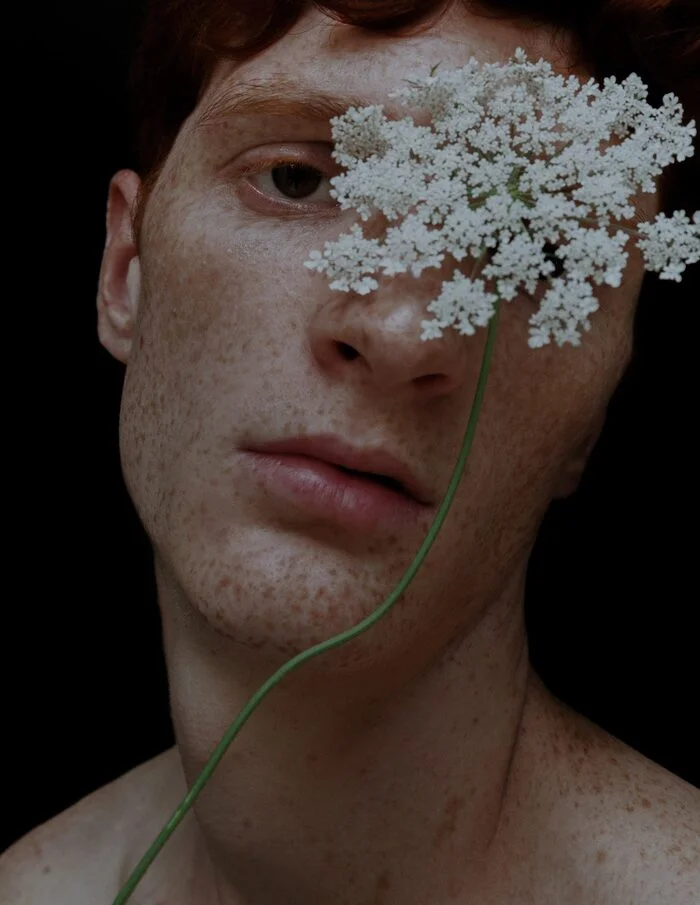
A close beauty portrait may create immediate intensity but leave no room to approach the subject. A wide frame may give the sequence somewhere to travel. Neither is automatically correct.
Think in relationships, not isolated images
Place two frames beside each other and ask what happens between them.
The relationship may be created by:
- a repeated colour;
- a change from stillness to movement;
- a matching line or gesture;
- a shift in scale;
- eye contact followed by refusal;
- an open space followed by compression;
- a visual answer to a question raised earlier.
If two images say exactly the same thing, the second one usually weakens the first. If they are completely unrelated, the reader has to rebuild the story after every page.
The strongest pairings create continuity and change at the same time.
Build rhythm through scale and density
A sequence needs breath.
Several wide frames in a row can keep the reader emotionally distant. Several close portraits can flatten their individual power. Several complex styling images can create visual fatigue.
Use changes in scale deliberately:
- wide frames establish environment and relation;
- medium frames reveal posture, silhouette and interaction;
- close frames intensify expression, texture and detail;
- still-life or detail images can function as pauses or evidence.
Rhythm is not a rigid wide-medium-close formula. It is control over attention. A repeated scale can create pressure when repetition is the point; variation can restore movement when the story becomes static.
Create a middle that changes the reading
Many series have a strong first frame and several good images but no development. They remain in the same emotional place.
Look for a midpoint that changes at least one condition:
- the subject becomes more exposed or more protected;
- the location changes from open to enclosed;
- colour enters or disappears;
- the camera moves closer;
- styling becomes disrupted;
- control gives way to movement;
- a recurring shape is broken.
The change does not need to be dramatic. It needs to make the second half impossible to read exactly like the first.
This is where the author’s idea becomes more than a visual theme. The sequence begins to make an argument.
Remove repetition without removing coherence
Cohesion is a relationship. Repetition is redundancy.
When two frames compete for the same role, compare:
- expression;
- gesture;
- silhouette;
- direction of movement;
- background information;
- colour balance;
- how each frame connects to the images before and after it.
Choose the one that does more work for the story.
Do not keep a near-duplicate merely to prove that the production created many usable frames. Editors are evaluating judgment as well as output.
End with resonance, not explanation
The final image should leave the story open in the right way.
An ending can:
- resolve the central tension;
- reverse the opening;
- return to an earlier visual motif with new meaning;
- withdraw from the subject;
- move closer than any previous frame;
- leave a deliberate absence.
Avoid finishing with whatever file remains after the strongest images are placed. Test several endings and notice how each one changes the whole sequence.
The last frame is where the reader decides what the story was about.
Edit for pages as well as screens
A magazine sequence may be experienced as a cover, an opening spread, single pages, pairs of facing pages and a final page. A website may present the same work vertically.
Prepare a sequence that can survive both.
Consider:
- which horizontal image can support a spread;
- whether an important face or detail sits near a possible fold;
- which two vertical images can face each other without competing;
- whether consecutive images point visually out of the layout;
- how the story reads one image at a time on mobile;
- whether the opener remains clear at thumbnail size.
Editors may revise the order for the final layout. A thoughtful submitted sequence still shows that you understand visual storytelling.
Use filenames to protect the order
Number the final files with two digits:
story-title_01_photographer-name.jpg
story-title_02_photographer-name.jpg
Continue in the exact intended order. Avoid camera filenames and terms such as final2, new-final or best.
Keep a separate contact sheet or low-resolution PDF for your own reference if the current submission platform allows or requests it. Follow the exact file requirements of the live call.
Ask whether the sequence says what the concept claims
Read the images without the concept statement.
Then ask:
- What does the first frame make me expect?
- What changes by the midpoint?
- Which frame repeats information?
- Where does attention fall?
- Does the ending transform the opening?
- Can I describe the emotional movement in one sentence?
- Is the author’s point of view visible in the order?
If the sequence only works after a long verbal explanation, the edit may not yet carry the idea.
Artells is interested in authors who communicate through photography. A sequence should not merely prove that several strong images came from the same shoot. It should show why they belong together and what their relationship allows the reader to feel or understand.
Before submitting the final sequence
Confirm that the current call accepts the number, orientation and publication status of your images. Prepare exact contributor and wardrobe credits, copyright permission and written releases for every identifiable person.
For anyone under 18, keep a separate written release from a parent or official legal guardian. Artells does not accept sexualised, nude, partially nude, sexually suggestive or sexually provocative content involving anyone under 18.
When the edit is ready, compare the current official routes on Submit Your Work. Artellsmagazine.com does not process submission payments, and submission does not guarantee acceptance, placement, sales, reach or a career result.
Photography series sequencing checklist
- The opener creates a clear promise.
- Every image has a role in the story.
- Adjacent frames create a meaningful relationship.
- Scale and density produce a deliberate rhythm.
- The midpoint changes the reading.
- Near-duplicates and decorative detours are removed.
- The ending leaves a purposeful afterimage.
- The order works on pages and on a vertical screen.
- Filenames preserve the intended sequence.
- The concept remains visible without a long explanation.
- Credits, permissions and releases are complete.