

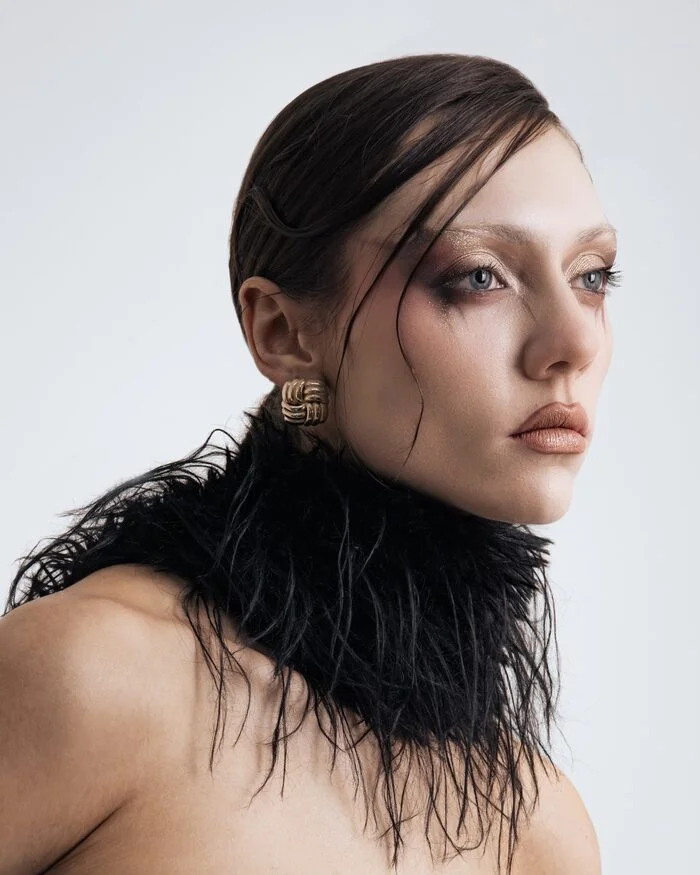
A fashion editorial concept is not a mood-board adjective such as “bold,” “cinematic” or “timeless.” It is a point of view: an idea the author wants the reader to encounter through images.
Strong editorials do more than display styling, beauty or technical control. They create a world with a reason to exist. Every choice—casting, garment, gesture, setting, colour and sequence—helps the author say something that could not be said in exactly the same way by another team.
Artells looks for authors who speak through photography. A polished image can attract attention, but a clear visual voice is what gives a series meaning and makes it memorable.
Start with a question, not an aesthetic
Before collecting references, write down what interests or unsettles you.
Your starting question might concern identity, performance, protection, memory, beauty standards, distance, transformation, belonging or the relationship between a body and a constructed space. It does not need to sound academic. It needs to create tension.
Compare these two beginnings:
- “A dark editorial with red light.”
- “What does confidence look like when it is partly armour and partly performance?”
The first describes a surface. The second can guide decisions. Red light may still appear, but now it has a function: it can suggest exposure, danger, desire or control depending on how the rest of the story is built.
If the question has only one obvious answer, it may produce an illustration rather than a story. Leave enough ambiguity for the images to think.
Write the concept in one precise sentence
A useful concept sentence identifies the subject, the tension and the visual action.
A practical structure is:
This story explores [subject] by showing [visual situation] as it changes between [two forces].
For example:
This story explores self-protection by placing a sharply styled figure in spaces that move from controlled symmetry to physical disorder.
That sentence is not promotional copy. It is a filter. When someone suggests a location, prop or look, ask whether it develops the sentence or merely decorates it.
Avoid sentences that could describe almost any fashion shoot:
- “A celebration of beauty and individuality.”
- “Where elegance meets edge.”
- “A modern take on timeless style.”
If the concept becomes weaker when the adjectives are removed, it is not specific enough yet.
Research without copying
References help a team communicate, but a mood board can quietly replace an original idea with someone else’s finished solution.
Research across different fields:
- a photograph for light or distance;
- a film still for atmosphere;
- a painting for colour relationships;
- architecture for structure and scale;
- writing for emotional tension;
- clothing history for silhouette;
- personal observations for gesture and behaviour.
Do not collect ten fashion editorials that already solve the same idea. That usually leads to imitation. Collect different kinds of evidence and decide what they mean together.
Under every reference, write why it is there. “Beautiful” is not a reason. “The subject is visually protected by the doorway” or “the green makes the skin feel unfamiliar” gives the team something usable.
Translate meaning into visual decisions
The concept must survive contact with production. Give every department a role in the same story.
Casting
Choose a person because their presence develops the idea, not only because their portfolio matches a trend. Think about energy, movement, gaze and the relationship between the subject and the camera.
Styling
Silhouette, texture and repetition can express conflict or change. A rigid look can become porous. Ornament can become armour. A garment can control movement rather than simply fill the frame.
Hair and makeup
Beauty choices should belong to the world of the story. Ask what changes between the first and last image, and whether that change is visible in detail, colour or surface.
Location and set
The background is part of the sentence. It can oppose the subject, absorb them, expose them or create a scale they must negotiate. A convenient location is not automatically a meaningful one.
Light and colour
Lighting is emotional grammar. Flat frontal light, hard shadow, mixed colour and fading daylight make different claims about distance, vulnerability and control.
Pose and gesture
Direct actions, not only shapes. “Turn your shoulder” creates a pose. “Protect the space without stepping back” creates behaviour. Behaviour carries meaning.
Build a visual system, then allow it to change
Cohesion does not require every frame to look identical. It requires the changes to feel intentional.
Choose a small visual system:
- one dominant relationship between subject and space;
- a controlled colour logic;
- two or three recurring gestures or shapes;
- a deliberate range of wide, medium and close frames;
- a rule for when the camera remains distant and when it comes close.
Then decide where the system breaks. The moment of change often gives the story its life. A stable composition may become crowded. Direct eye contact may disappear. A protective silhouette may open.
The break should reveal something. Random variety only weakens the concept.
Make a concept deck the team can actually use
A concise concept deck is often more valuable than a large mood board.
Include:
- a working title;
- the one-sentence concept;
- a short note about the emotional movement of the story;
- six to twelve purposeful references with written reasons;
- casting, styling, beauty, location and light directions;
- a proposed beginning, turning point and ending;
- practical boundaries, rights and release requirements;
- the intended publication format and image orientation.
This document should help the team make decisions when the original reference is no longer in front of them.
Test whether the photographs speak without the statement
Text may open a door, but the images must carry the reader through it.
After the first edit, show the sequence to someone who has not seen the concept deck. Do not explain it first. Ask:
- What changes from the beginning to the end?
- What does the subject seem to want, resist or protect?
- Which frame feels necessary?
- Which image belongs to a different story?
- What stays with you after the sequence closes?
The viewer does not need to repeat your sentence word for word. But if they perceive no relationship, tension or movement, the idea may exist only in the statement.
Protect authorship and collaborators
An authorial concept does not excuse careless production.
Make sure the work respects the people and references it involves. Obtain written model releases, parental or official-guardian consent for identifiable people under 18, and all necessary copyright, property and location permissions.
The submitter is responsible for having authority to submit the work and for the accuracy of credits. Artells does not accept sexualised, nude, partially nude, sexually suggestive or sexually provocative content involving anyone under 18.
Read the current Submission Terms before sending the story.
Know when the concept is ready to submit
A concept is ready when the photographs, not only the pitch, demonstrate:
- a recognisable authorial point of view;
- a clear relationship between idea and form;
- enough consistency to create one world;
- enough development to reward a sequence;
- accurate credits and complete permissions;
- an editorial fit with the current call.
Do not add more symbolism because the series feels quiet. Precision is stronger than explanation.
When the work is ready, review the current routes on Submit Your Work. Submission does not guarantee acceptance, a cover, a specific position, sales, reach or a career result; editorial fit remains part of the decision.
Fashion editorial concept checklist
- I can state the idea without generic aesthetic adjectives.
- The story begins with a question or tension.
- Every department understands its role in the same concept.
- References explain principles rather than prescribe copies.
- The visual system is consistent and changes intentionally.
- The images communicate before the written statement is read.
- The sequence contains a beginning, development and ending.
- Credits, copyright permissions and releases are complete.
- The series fits the current magazine call.